Bass Coast Post
  • Home
    • Recent editions
  • News
  • Point of view
    • View from the chamber
  • Contributors
    • Anabelle Bremner
    • Anne Davie
    • Anne Heath Mennell
    • Bob Middleton
    • Bruce Phillips
    • Carolyn Landon
    • Catherine Watson
    • Christine Grayden
    • Daryl Pellizzer
    • Dick Wettenhall
    • Dyonn Dimmock
    • Ed Thexton
    • Etsuko Yasunaga
    • Frank Coldebella
    • Gayle Marien
    • Geoff Ellis
    • Gill Heal
    • Harry Freeman
    • Ian Burns
    • Joan Woods
    • John Coldebella
    • Julie Paterson
    • Julie Statkus
    • Kit Sleeman
    • Laura Brearley >
      • Coastal Connections
    • Lauren Burns
    • Liane Arno
    • Linda Cuttriss
    • Linda Gordon
    • Lisa Schonberg
    • Liz Low
    • Marian Quigley
    • Mark Robertson
    • Mary Aldred
    • Mary Whelan
    • Matt Stone
    • Meryl Brown Tobin
    • Michael Whelan
    • Mikhaela Barlow
    • Miriam Strickland
    • Natasha Williams-Novak
    • Neil Daly
    • Oliver Jobe
    • Patsy Hunt
    • Pauline Wilkinson
    • Richard Kemp
    • Rob Parsons
    • Sally McNiece
    • Terri Allen
    • Tim Shannon
  • Features
    • Features 2025
    • Features 2024
    • Features 2023
    • Features 2022
    • Features 2021
    • Features 2020
    • Features 2019
    • Features 2018
    • Features 2017
    • Features 2016
    • Features 2015
    • Features 2014
    • Features 2013
    • Features 2012
  • Arts
    • Arts
  • Local history
    • Local history
  • Environment
    • Environment
  • Nature notes
    • Nature notes
  • A cook's journal
  • Community
    • Diary
    • Courses
    • Groups
    • Stories
  • About the Post

The picture theatre wars

31/5/2014

0 Comments

 
PictureThe Land Beyond the Sunset, 1912. Starring Martin Fuller. Produced by the Fresh Air Fund.
By Carolyn Landon

IN 1910, Wonthaggi miners without their families were hungry for entertainment. They had their football, boxing, foot races and cricket among other things. They also had their band, but, as their wives and children began to join them on the coalfield, they needed more. 

The women wanted something social and something to dress up for. They began holding dances for any reason any night of the week. Consequently, Wonthaggi was filled with halls of varying types and sizes to hold dances in, among them Henry’s Hall, White’s Hall, the Lyceum Hall, Smiths’ Hall. ​


Read More
0 Comments

From strength to strength

17/5/2014

0 Comments

 
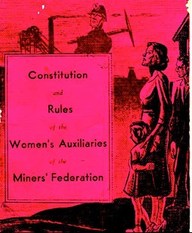
Picture
By Carolyn Landon

“WHEN, in 1934, the wives of striking Wonthaggi Miners formed their own broad committee to support the strike, Australian history was made,” wrote Noel Maud in the Sentinel Times in April 1988. During the five-month strike in 1934, the militant miners at the Wonthaggi State Coal Mine took over control of the strike organisation and formed, for the first time in Australian union history, a broad committee (comprising all sections of the union) for relief funds, entertainment and propaganda. 

Under the direction of Arthur Asquith and Tom Currie, 60 volunteers formed into sub-committees operating from the Miners’ Union Theatre. After the June elections, the women were asked to help. So they formed a women’s broad committee and co-operated with the men in relief, especially for children and mothers. ​


Read More
0 Comments