Bass Coast Post
  • Home
    • Recent editions
  • News
  • Point of view
  • Contributors
    • Anabelle Bremner
    • Anne Davie
    • Anne Heath Mennell
    • Bob Middleton
    • Bruce Phillips
    • Carolyn Landon
    • Catherine Watson
    • Christine Grayden
    • Daryl Pellizzer
    • Dick Wettenhall
    • Dyonn Dimmock
    • Ed Thexton
    • Etsuko Yasunaga
    • Frank Coldebella
    • Gayle Marien
    • Geoff Ellis
    • Gill Heal
    • Harry Freeman
    • Joan Woods
    • John Coldebella
    • Julie Paterson
    • Julie Statkus
    • Kit Sleeman
    • Laura Brearley >
      • Coastal Connections
    • Lauren Burns
    • Liane Arno
    • Linda Cuttriss
    • Linda Gordon
    • Lisa Schonberg
    • Liz Low
    • Marian Quigley
    • Mark Robertson
    • Mary Aldred
    • Mary Whelan
    • Matt Stone
    • Meryl Brown Tobin
    • Michael Whelan
    • Mikhaela Barlow
    • Miriam Strickland
    • Natasha Williams-Novak
    • Neil Daly
    • Oliver Jobe
    • Patsy Hunt
    • Pauline Wilkinson
    • Richard Kemp
    • Rob Parsons
    • Sally McNiece
    • Terri Allen
    • Tim Shannon
  • Features
    • Features 2025
    • Features 2024
    • Features 2023
    • Features 2022
    • Features 2021
    • Features 2020
    • Features 2019
    • Features 2018
    • Features 2017
    • Features 2016
    • Features 2015
    • Features 2014
    • Features 2013
    • Features 2012
  • Arts
    • Arts
  • Local history
    • Local history
  • Environment
    • Enviroblog
  • Nature notes
    • Nature notes
    • Birdwatching >
      • Birdwatching
    • Gardening
  • A cook's journal
  • Community Diary
  • About the Post

Adrift in shallow waters: 92 days of winter swimming, walking & watching

2/12/2021

11 Comments

 
By Rees Quilford

Each day of our first COVID winter I left the warmth of our new home, meandered through sleepy streets, over the dunes, down to the same secluded stretch of sand that marks the threshold between shore and sea. I walked the vacant coastline then dove into the bracing cold to swim in the sea. Every day of that arduous winter, all ninety-two of them, I returned to the same place in search of something different. Once there, I sought to reconnect with that once familiar place.
​     The shoreline I visited is a place of my childhood and adolescence, the Cape Paterson Bay Beach, the unobtrusive shoreline of a quiet seaside village in the heart of Victoria’s Bass Coast. It’s a haunt I’ve known since birth, one that elicits fuzzy recollections of sunburnt skin, chapped zinc smeared lips, and dawdling fishing. 
Picture
Every day of that first arduous Covid winter, Rees Quilford dived into the bracing cold of Bass Strait, took a Polaroid photo, and documented his thoughts. The resulting essay has won the 2021 Bass Coast Prize for Non-Fiction.

Read More
11 Comments

Nothing We Liked Better: a house remembered, a home restored

10/3/2021

1 Comment

 
“I then had to look for another home, and there being plenty of places for sale at the time I travelled about a bit, but saw nothing I liked better than around Moyarra.”
William Rainbow, in his pioneering memoir published in 
​
The Land of the Lyrebird, 1920.
By Jillian Durance
 
Prologue: The Promise

In the summer of 1997, we went looking for a home in South Gippsland. We were a couple, not so young, but newly together. The late February afternoon was breathless with heat. The hills rolled away in every direction, their shoulders taut and dried under the sun.
 
The car pulled up in the dense shade of an enormous pine tree. Its bark was ravined and craggy, like the wrinkled skin of an ancient giant, its trunk the width of three or four people holding hands to encircle it.
 
At the green wrought iron gate, half open, we caught a glimpse of the old homestead: the outline of a gabled roof, a brick chimney lined with tufts of grass, a window under the deep brow of the return verandah, weatherboards bare of paint. It carried an air of weary charm that cast its spell and slowly reeled us in. We walked through the welcome cool of a rambling garden.
Picture
Jillian Durance was highly commended in the 2020 Bass Coast Prize for Non-Fiction for Nothing We Liked Better: a house remembered, a home restored, six excerpts from a longer memoir. 

Read More
1 Comment

Cape Connection

25/2/2021

5 Comments

 
By Lauren Burns

What if he didn’t like me? 
 
What if I was an unwelcome reminder of past regrets?  
 
What if he just wanted to look at me once, for curiosity, and then cut off contact?
 
I sat in the passenger seat nervously twisting my fingers, staring out the window at suburbia as my partner Gerard steered the car south through Melbourne’s eastern suburbs. We were headed for the coast.
 
Height: 5’11” Hair colour: Fair Eye colour: Blue
 
Weight: About 11.5 stone (73 kg) Race: Caucasian

​
For the past five years these non-identifying facts were all I knew about donor C11, my biological father. This reduction gave me nothing of his essence. What did he care about? What made him laugh? Did we look alike, or share interests? Did it matter?

Picture
Lauren Burns was highly commended in the 2020 Bass Coast Prize for Non-Fiction for her memoir Cape Connection. This essay is part of a book entitled Triple Helix which will be published by University of Queensland Press in 2022.

Read More
5 Comments

On the Shore of the Wide World

9/2/2021

15 Comments

 
By Fiona Power
 
I HAD just turned five when George Bass sailed into my consciousness. It was the mid nineteen seventies and my family lived on a dairy farm near Warragul. I roamed a known territory; if I wasn’t shadowing my father up and down grassy slopes, I was building cubbies with my older sister or playing with my dolls on the veranda when she went off to school.
 
I took my bearings from seasonal markers. I celebrated my birthday in September, and it seemed that the natural world did too. It was then that it began to transform and grow before me. Blossom burst out on branches, daffodils bobbed beneath the orchard fence line and black and white calves appeared in the green pasture and staggered to their feet for their first drink.
Picture
Fiona Power’s essay On the Shore of the Wide World was highly commended in the 2020 Bass Coast Prize for Non-Fiction. A wry account of growing up in Bass, on the edge of Western Port, it cleverly merges memoir with local history.

Read More
15 Comments

No place like home

28/1/2021

5 Comments

 
By Karen Bateman

​THE first time I saw Patrice Mahoney was at the leaving do of a colleague. It was early evening at the hub. I was hiding behind a table of hors d’oeuvres to avoid being dragged into a kooky conga line, encouraged by a riotous brass band. I was in the sort of mental quandary that all introverts will recognise (contradictory desires, to both cut loose like those brazen extroverts and quietly sneak home and read).

Patrice was stood near the community house door, chatting to people whose name I don’t know and whose faces I can’t remember. I do remember she was wearing an orange shawl and seemed so still among the chattering bustle.  The music stopped, the speeches started, and Patrice took centre stage.  I don’t recall much about the speech. What sticks is Patrice telling the crowd that there were no crows in this area, only ravens, and how contained Patrice seemed, how entirely solid and sure of herself in this hub, in this town.
Picture
Karen Bateman was highly commended in the Bass Coast Prize for Non-Fiction for her essay No Place Like Home. Can we ever know a place that we didn’t grow up in? The author is caught between gratitude for the beauty of her adopted home in Bass Coast and longing for another place where she has deeper roots.  

Read More
5 Comments

Sometimes Nothing Can Happen but Fire

8/12/2020

2 Comments

 
​By Max Hayward

                1. Christmas at The Cape

The path to the beach seemed endless as a ten-year-old. Dried up banksia seed pods and barky sticks poked out of the dirt path that transformed into sand as you approached the dunes. A thick and heavy tangle of tea tree limbs and eucalypts filtered the sunlight, so it didn’t burn until you got out onto the beach, which was dazzlingly bright and invariably windy.

Victoria’s coastline is uncomfortable. There are rocky headlands that abut vast sandy beaches only reachable by boat or kayak. Dense banks of scrub fringe most of the Eastern shores, while there are also stretches of marsh, and cliffs built of crepe-like sand around the bays, with limestone escarpments plunging into the surf in the south-west. Gales batter and cold fronts whip across the worn-down coast through the year. And in the moments of calm, when Victorians clamber to the shore for a swim or surf, we plunge into icy water that never reaches New South Wales temperatures. Defying logic, we wallow with the sharks and clumps of shark-like kelp, thrilled to be in the wildness of it all.
Picture
Max Hayward won third equal prize in the 2020 Bass Coast Prize for Non-Fiction with Sometimes Nothing Can Happen but Fire. Part family memoir, written in the wake of the summer bush fires, it explores our relationship with these fire-prone lands contrasting Aboriginal notions of custodianship of land (including controlled burning) with European concept of ownership.  

Read More
2 Comments

Paper Thin

25/11/2020

11 Comments

 
By Lucinda Bain
​

I thought I knew something of death. Until, on the 20th of May 2016 – my 34th birthday – I found myself breastfeeding my third baby in the same room as my dead grandfather. It was at this point, sitting stunned and limp, feeling only the gentle tug of Pearl’s round-o-mouth around my nipple, that I realised: I knew nothing.

My mother had phoned me in January that same year to tell me of my grandfather’s illness. It was a shock: my tanned, robust, skiing, camping, stoic grandfather unwell? His mother had lived to 93 and to me, even in my thirties, he still held that kind of dream-like invincibility of my childhood.

​In my mind I knew him to be at home by the sea, looking out over the black windows of evening alone, as my mother told me the news. At that moment the water was crashing into the cliffs of Cape Woolamai just as it had always done, caring little for the man sitting with death inside him, a stones throw from where it relentlessly hurled itself upon the shore.

Picture
Lucinda Bain’s has won third equal prize in the 2020 Bass Coast Prize for Non-Fiction with Paper Thin. A parallel memoir of a grandfather’s death and a daughter’s birth, the story draws you in from the first intriguing sentence to the last powerful moment.

Read More
11 Comments

Who speaks for the trees and creeks?

11/11/2020

17 Comments

 
or RUN if you hear the word Peri-urban
By Jeannie Haughton
 
While most of us were anxiously locked in our homes in April 2020, wondering if a global virus might change our lives forever, a development company slipped into a section of Drouin, calmly carried on their normal routine of destroying natural environments to create man-made ones, and actually did change my life. Forever.

Within a few days over 80 mature, Protected trees were felled on the small regional road where I have lived for over thirty years.

Along one side of McGlones Road (northern end) remnant trees 150 years old as well as bush, understory and grasses (all wildlife habitat) were razed. Numbers of trees on the other side of the road were also removed. In the next few weeks a meandering creek disappeared, teeming wetlands and soggy places were scoured and carved into shallow waterways and basins. Pumping stations and pipelines were created to control the seasonal waterflow.​
Picture
Drouin writer and theatre director Jeannie Haughton won second prize in the Bass Coast Prize for Non-Fiction with Who Speaks for the Trees and Creeks? or RUN if you hear the word Peri-Urban.

Read More
17 Comments

At Screw Creek

25/10/2020

8 Comments

 
I acknowledge the Bunurong/Boon Wurrung people,
the traditional custodians of the land upon which this narrative is set.
I pay my respects to their elders past, present and emerging
and to all Aboriginal and Torres Strait Islander people.
By Linda Cuttriss

At Screw Creek, in the dead of night on the far edge of town, a man crept silently aboard the Lizzie.  His plan was dangerous and risky but he was fed up being paid a pittance for long hours of back-breaking work.  This would teach his boss a lesson and settle things once and for all.
 
The sound of the explosion would have boomed across town, rattling windows and shaking the townsfolk from their sleep.  There would have been quite a fuss the next day as word got around that Lizzie had been blown to pieces.  Many would have known that local man, Jack Graham had the contract to ‘metal’ the ‘all weather’ approaches to Screw Creek bridge just outside of Inverloch and that he was using Lizzie to carry stone upstream from the nearby Cuttriss quarry, but I wonder how many knew of the dispute that had been smouldering.  The report in the local newspaper would have kept them guessing:
Picture
Bass Coast writer Linda Cuttriss won the 2020 Bass Coast Prize for Non-Fiction with this essay, part true detective story, part local history, part family history.

Read More
8 Comments

Literary flame still burns in Bass Coast

29/4/2020

3 Comments

 
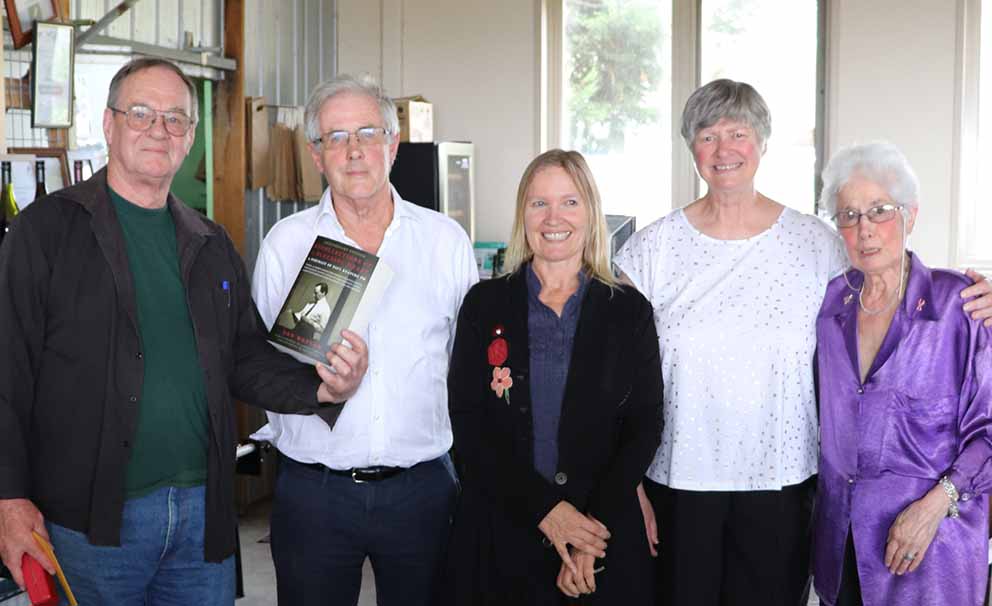
Picture​The writers group at the prize giving for the 2019 Bass Coast Prize for Non-Fiction: from left, Malcolm Brodie, Don Watson (guest speaker), Julie Constable, Christine Grayden and Phyllis Papps.
By Catherine Watson
 
WHILE these are grim times for the arts community, for many writers, artists, musicians it's also a time to step back from the usual noise and bustle and actually create.
 
The second Bass Coast Prize for Non-Fiction has been brought forward to take advantage of the COVID-19 lockdown when many writers have more time for writing.
 
Entries are now open for the 2020 Bass Coast Prize, one of the richest competitions for non-fiction in Australia, with a total of $10,000 in prize money.  The first prize winner will receive $5000, second $3000 and third $2000.
 
Given the cancellation of exhibitions, concerts, plays and arts festivals, including our own Phillip Island Story Gatherers Festival, the non-fiction prize keeps the literary flame burning in Bass Coast. 


Read More
3 Comments
<<Previous
Forward>>